A stone countertop can feel like one continuous surface, yet most kitchens and many bathrooms need at least one seam. That seam can look clean and purposeful, or it can become the first thing people notice.
Good seam planning is part design, part engineering, part project control. Homeowners want a surface that looks calm. Builders want fewer call-backs. Designers want vein flow that reads as intentional. Fabricators want a plan that cuts cleanly, carries weight, and installs without drama.
What A Seam Is And Why It Exists
A seam is the join where two countertop pieces meet. The joint is filled with a colour-matched adhesive, then polished to sit flush. Seams exist for practical reasons, not for lack of skill.
These are the main drivers of seams.
Slab Size And Access Limits
Stone slabs have fixed sizes and weight limits. Many kitchens exceed what a single piece can cover. Access adds another constraint. Tight stairwells, narrow doorways, and sharp turns can stop a large piece from reaching the room safely.
Cut-Outs And Structural Weak Points
Sink and hob cut-outs remove material and can create stress points. In some layouts, splitting a top into two pieces reduces risk around these openings. A seam can act as a planned break that keeps each section strong during transport and install.
Design Choices
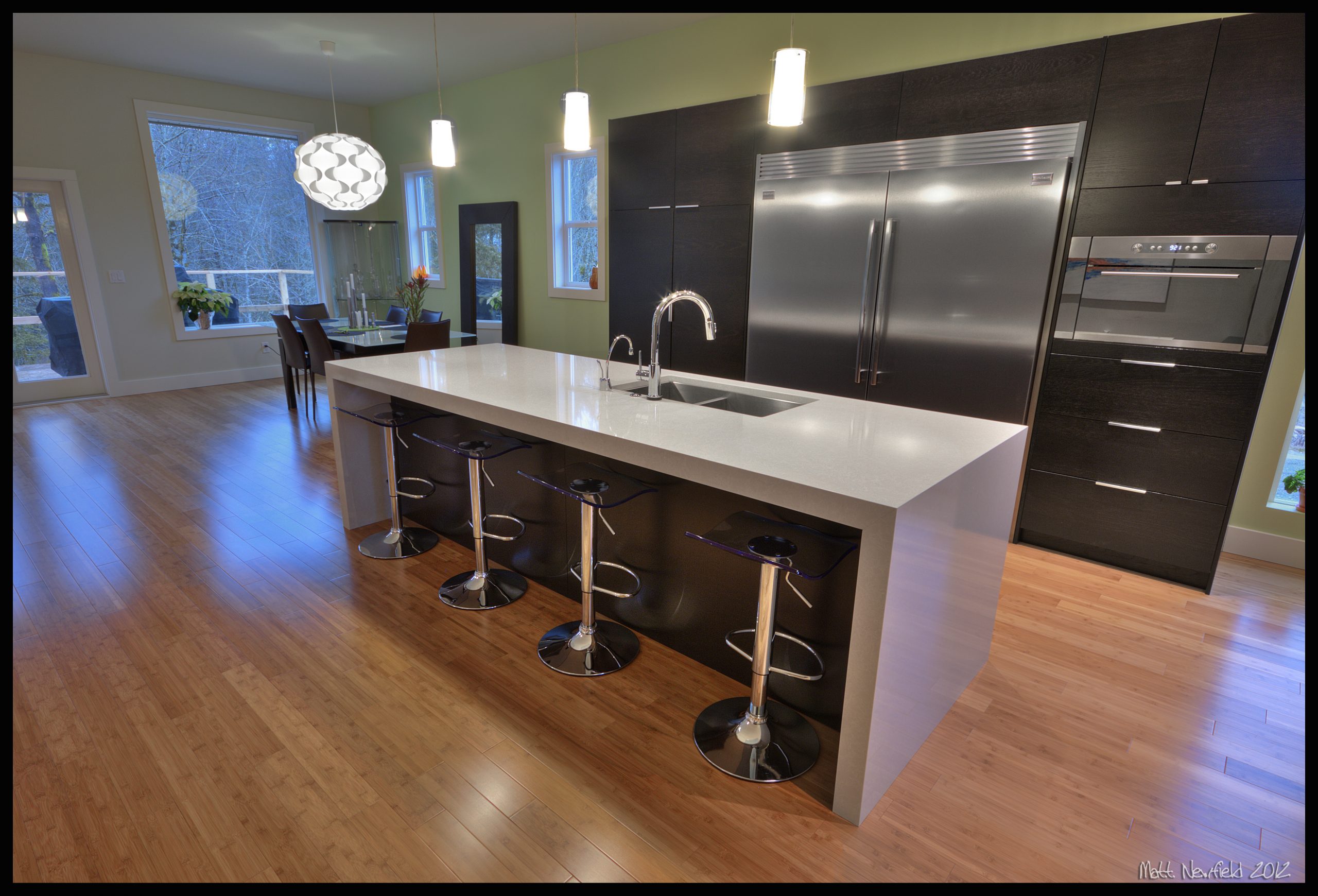
Waterfall ends, dramatic veining, and bookmatched layouts can introduce seams by choice. On an island, a seam might be placed to keep vein direction consistent across key sightlines.
Where Seams Usually Go In Kitchens And Baths
Seams placement should feel logical. The best seams often sit where eyes and hands do not linger, and where the join carries minimal load.
The following are the typical seam locations for common layouts.
Along Cabinet Breaks
Seams often sit above a cabinet side panel or a strong support rail. This gives the joint solid backing and reduces flex. It also makes the join easier to keep flush over time.
Near Cooktops Or Sink Runs
A seam close to a cut-out needs careful planning. Fabricators may avoid placing a join too near a sink or hob if the remaining stone would be narrow. When the layout demands it, reinforcement and support become more important.
At Corners And L-Shapes
L-shaped kitchens usually need a seam at the corner. The goal is to keep the join away from the highest-traffic prep zone and to avoid placing it where water and crumbs collect.
On Islands And Peninsulas
Large islands often require more than one piece. Seams may sit near a sink cut-out, at a waterfall end transition, or along a bracket line. A smart plan keeps the seam out of the main viewing angle from living areas.
How Fabricators Reduce Seam Visibility
A seam does not need to announce itself. The right planning and finishing can make the join fade into the pattern.
Here are the main ways fabricators keep seams discreet.
Slab Layout And Vein Flow
Veining and movement dictate seam success. A seam cut through a quiet section of pattern tends to blend better than a join that slices across a bold vein. For marble-look quartz, vein direction and repeat pattern matter as much as colour.
Helpful Layout Approaches
- Place seams in lower-contrast sections of the slab
- Continue vein direction across the join
- Use bookmatching for statement islands when suited to the design
- Keep seam lines away from focal points like a range hood centreline
Finish Choice And Light Reflection
Polished finishes reflect light and can highlight small height differences. Honed and matte surfaces scatter light, so small joins can appear softer. The finish does not hide poor workmanship, yet it influences how the seam reads from different angles.
Colour-Matched Adhesives
Most shops use tinted adhesives to match the dominant tone in the stone. For stones with movement, the seam colour choice matters. A warm tint can blend a creamy granite. A cooler tint can suit grey veining.
Skilled Polishing And Final Touches
The seam needs to sit flush. The adhesive needs to cure cleanly. The surface needs polishing to match the surrounding sheen. When that process is rushed, the join can telegraph through the surface.
Strength Factors That Matter
A seam should be strong enough to handle daily use, seasonal shifts, and heavy items like stand mixers and stoneware.
These are the key strength drivers that deserve attention.
Support Under The Joint
The strongest seams sit over stable support. If the cabinets are out of level or the tops have gaps, the seam can take stress. A flat, supported base helps keep the joint stable.
Reinforcement Near Cut-Outs
Cut-outs weaken stone. Reinforcement methods vary by shop and material. Some fabricators use fibreglass rods in routed channels. Others use metal straps or stone build-ups. The goal is the same, strengthen vulnerable zones without changing the visible design.
Overhang Depth And Bracket Planning
Overhangs introduce bending forces. Seams placed on an unsupported overhang face higher stress. Brackets and corbels need coordination with seam locations, especially on breakfast bars and waterfall ends.
Adhesive Quality And Cure Time
The adhesive does more than fill a gap. It bonds the pieces and helps resist movement. Cure time and temperature affect the bond. A rushed install can reduce bond strength and increase future issues.
Questions To Ask Before Fabrication Starts
A seam plan should be reviewed early, before cutting begins. The most costly problems start with assumptions that never get checked.
These are the questions that keep decisions clear.
Seam Placement And Rationale
Ask where seams will sit and why. A good answer includes support points, cut-out proximity, and how the join will look from main sightlines.
Layout Proof And Approval
Ask for a layout proof that shows seam lines on the slab image. Confirm the vein direction. Confirm which edge faces the room. This step prevents surprises, especially with highly patterned stone.
Joint Finish Expectations
Ask what seam width the shop targets and how they finish the joint. A seam will not vanish, yet it should sit flush and feel smooth to the touch.
Warranty And Call-Back Process
Ask what is covered and what is not. Movement from cabinet shift can sit outside a workmanship warranty. Clear terms keep everyone calm.
Seam Planning By Material
Material type influences seam approach. Some stones polish differently. Some engineered materials have repeat patterns that need careful matching.
These are general tendencies to guide expectations.
| Material | Seam Blending Potential | Notes For Planning |
| Granite | Often strong | Movement can hide seams when laid well |
| Marble | Can show joins | Vein direction and polish match matter |
| Quartz | Consistent tone helps | Pattern repeats can reveal joins if misaligned |
| Quartzite | Strong, dramatic | Bold veining needs a clear layout proof |
Closing Thoughts
Stone countertop seams sit at the intersection of appearance, strength, and project control. A well-placed seam can disappear into the pattern and perform for years. A poor plan can lead to stress, extra visits, and an avoidable remake.
Ask for the seam plan early. Review the slab layout proof. Confirm support points and cut-out specs. When those steps happen in the right order, the seam becomes a quiet detail, not a daily frustration.