Waterfall countertops have become one of the most recognizable features in modern kitchen design. Instead of stopping at the edge of an island or cabinet, the countertop material continues vertically down the side, creating a clean, dramatic panel that reaches toward the floor. The result feels polished, architectural, and high-end.
This style works especially well when the countertop material has movement, color, or veining worth showing off. It can turn a kitchen island from a simple work surface into the centerpiece of the room. Still, a waterfall edge is not the right fit for every space, budget, or layout.
Before choosing this look, homeowners should understand where it works best, which materials make the biggest impact, and what details matter during planning.
What Is A Waterfall Countertop?
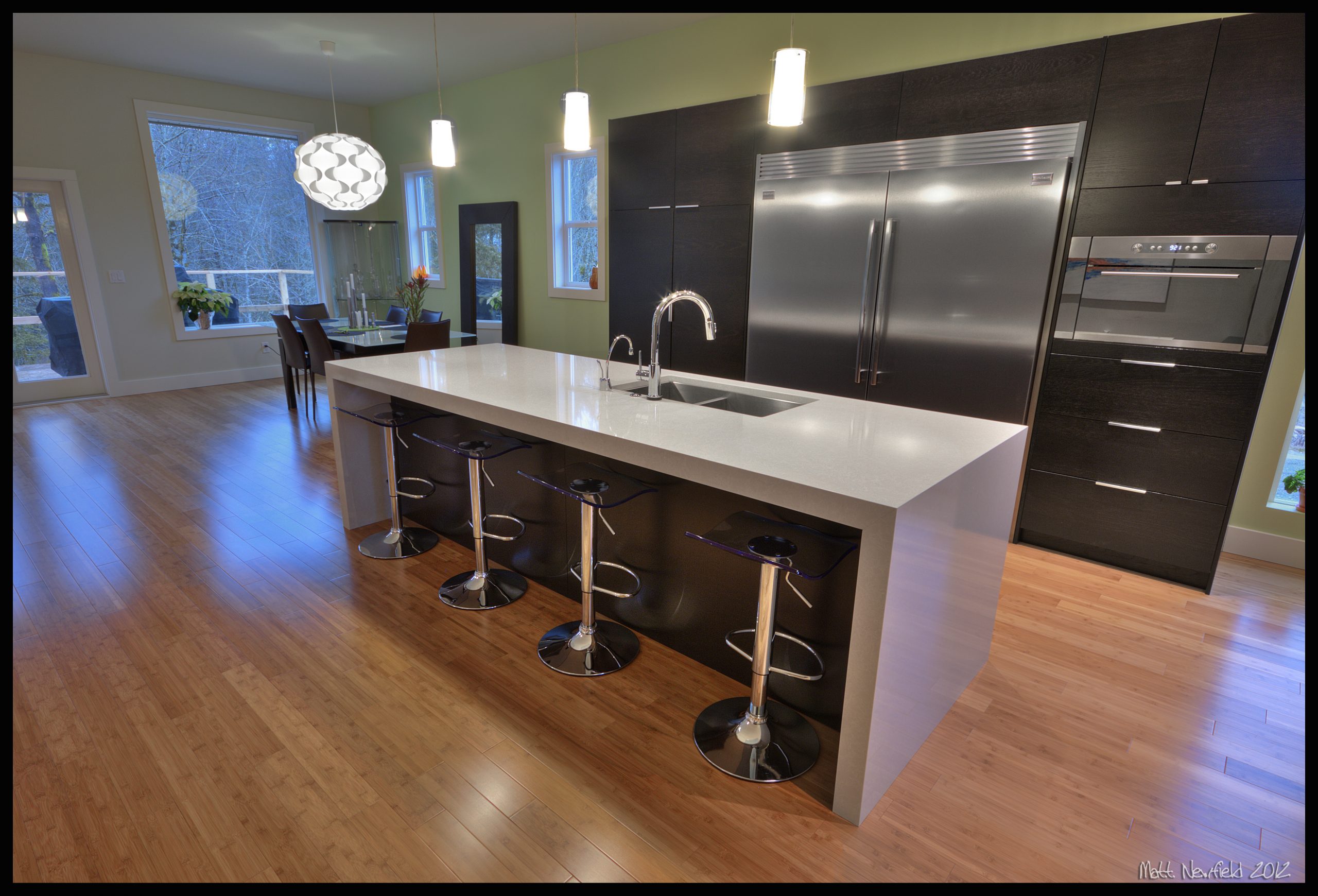
A waterfall countertop is a design where the surface material extends over the edge and down the side of an island, peninsula, or cabinet run. Rather than exposing the cabinet side panel, the stone or engineered surface wraps down vertically.
This creates a continuous visual line from the top surface to the floor. In many kitchens, the waterfall side becomes a focal point because it shows more of the slab than a standard countertop edge.
Waterfall countertops are most often used on kitchen islands, but they can also appear on bathroom vanities, bar areas, reception desks, and built-in workspaces.
Waterfall Countertop Benefits At A Glance
| Benefit | Why It Matters | Best Use |
|---|---|---|
| Luxury Appearance | Creates a clean, high-end focal point | Kitchen islands |
| Extra Surface Protection | Covers exposed cabinet sides | Busy family kitchens |
| Slab Showcase | Displays veining and color movement | Statement stone designs |
| Modern Style | Adds sharp, architectural lines | Contemporary spaces |
| Design Continuity | Connects counters, cabinets, and flooring | Open floor plans |
When A Waterfall Countertop Makes Sense
A waterfall edge makes the most sense when the island or cabinet side is highly visible. If the side of the island faces the main living area, dining space, or entry path, the waterfall panel can make that view feel more intentional.
This style also works well in open-concept homes where the kitchen is part of the main living space. Since the island is often visible from several angles, the extra stone coverage helps the kitchen feel finished from every side.
A waterfall edge is also a smart choice when the cabinets are simple. Flat-panel doors, minimalist hardware, and neutral colors create a clean backdrop that lets the stone become the main design feature.
Best Places To Use A Waterfall Edge
Kitchen Islands
Kitchen islands are the most common place for waterfall countertops. The vertical slab panels frame the island and make it feel more like a built-in furniture piece.
Peninsulas
A peninsula with an exposed end can benefit from a waterfall edge, especially when it separates the kitchen from a dining or living area.
Bar Seating Areas
A waterfall side can define the end of a seating area and give the island a stronger visual boundary.
Commercial Or Builder Projects
Waterfall edges can also be a strong design feature in model homes, luxury rentals, and shared spaces. Builders planning new construction countertops may use this detail to make kitchens feel more custom and memorable.
Materials That Work Well For Waterfall Countertops
The material choice has a major impact on the final look. Since a waterfall edge shows both the horizontal surface and vertical side, slab appearance matters more than usual.
Granite
Granite brings natural depth, movement, and durability. Since every slab is unique, a waterfall edge can highlight mineral patterns and color variation in a bold way. Homeowners who want a natural stone surface with long-lasting performance often consider granite countertops for this type of design.
Quartz
Quartz is popular for waterfall islands because it offers consistent patterns, predictable colors, and low maintenance. It can create a clean modern look, especially in white, gray, black, or soft neutral tones. For homeowners wanting a sleek island with strong everyday durability, quartz countertops are often a practical choice.
Quartzite
Quartzite is a natural stone that often has dramatic veining and a luxury feel. It can give a waterfall countertop a striking marble-like appearance with impressive strength. Homeowners who want natural movement and a refined look may consider quartzite countertops for a statement island.
Marble
Marble has classic beauty and soft veining that can look elegant on a waterfall edge. It is often chosen for high-end kitchens, bathrooms, and feature areas where appearance is the main priority. Because marble needs more care than some other materials, it works best for homeowners who appreciate its natural character and are comfortable maintaining it. For a timeless luxury look, marble countertops can make a strong design statement.
Design Details That Matter
A waterfall countertop looks simple when finished, but it depends on careful planning. Measurements, slab layout, seam placement, and edge thickness all affect the final result.
Vein Matching
If the slab has strong veining, the fabricator may be able to align the pattern so the design appears to flow from the top down the side. This is one of the most impressive parts of a waterfall installation.
Edge Thickness
Thicker-looking edges can make the island feel bold and substantial. Thinner profiles can create a sleeker modern style.
Seam Placement
Seams should be planned carefully so they do not interrupt the visual flow. In some materials, seams may be more noticeable depending on color and pattern.
Cabinet Support
The cabinetry must be ready to support the material properly. A waterfall edge adds weight and requires accurate installation.
Waterfall Countertop Planning Checklist
Before moving forward, review these points:
- Is the island side visible from the main living area?
- Does the slab have veining or color worth showcasing?
- Will the style match the cabinets and flooring?
- Is the budget ready for extra material and fabrication?
- Can the fabricator plan clean seams and strong support?
- Will the design still feel current years from now?
- Does the space need a bold focal point?
These questions help determine if the waterfall edge adds real value to the design.
Cost Factors To Keep In Mind
A waterfall countertop usually costs more than a standard countertop because it requires more material, more fabrication, and more installation time. The vertical side panels must be measured and cut with precision. If vein matching is desired, the slab layout may require extra planning.
Cost can also change based on the number of waterfall sides. A single waterfall end will usually cost less than both ends of an island. Larger islands, thicker edges, and premium slab choices can also raise the final price.
For some homeowners, the added cost is worth it because the island becomes the main visual feature of the kitchen.
When A Waterfall Edge May Not Be The Best Fit
A waterfall countertop may not be necessary when the side of the island is hidden or rarely seen. If the kitchen is small and the island already feels heavy, adding vertical stone panels may make the room feel more closed in.
It may also be less useful when the homeowner prefers a warm, traditional cabinet-forward design. In those spaces, decorative end panels or furniture-style details may feel more natural.
A waterfall edge works best when it supports the overall design, not when it competes with every other feature in the room.
Final Thoughts On Waterfall Countertops
Waterfall countertops make sense when a homeowner wants a kitchen island or cabinet feature to feel polished, dramatic, and built into the overall design. They are especially effective in open layouts, modern kitchens, and spaces where the stone deserves extra attention.
With the right material, careful measurements, and thoughtful fabrication, a waterfall edge can turn a countertop into a lasting design feature that adds beauty, protection, and visual impact.