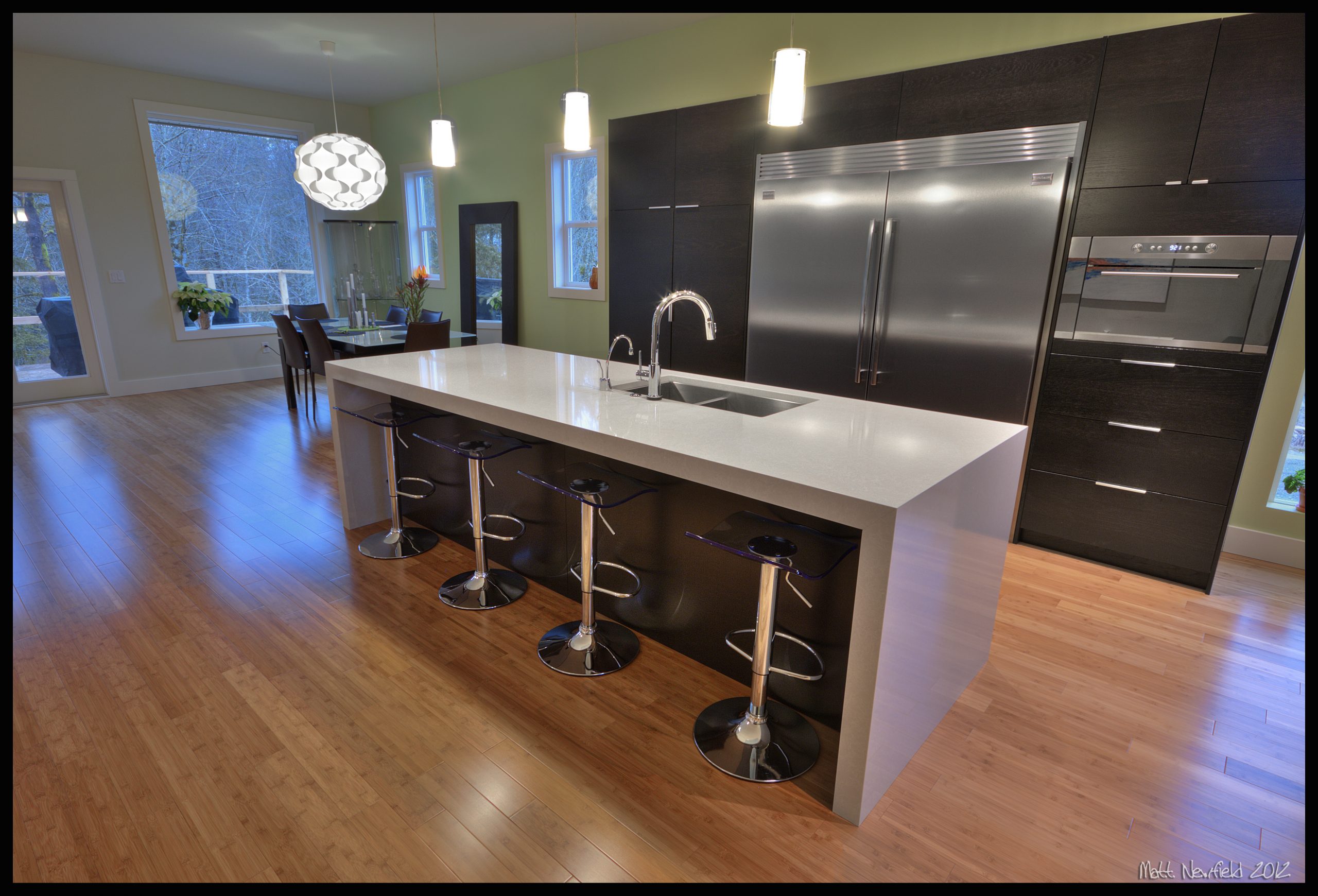
Adding bar seating to a kitchen island or peninsula can make the room feel more welcoming, practical, and complete. It gives family members a casual place to eat breakfast, guests a spot to gather, and homeowners a useful surface for meals, homework, serving, and conversation.
One detail makes a major difference: the countertop overhang.
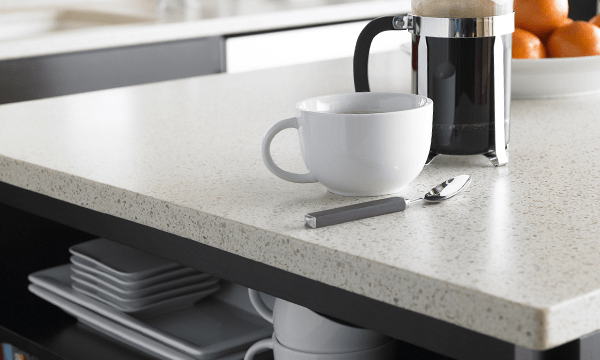
A countertop overhang is the portion of the countertop that extends past the cabinets or support structure below it. For bar seating, this space gives people room for their knees, stools, and comfortable movement. A shallow overhang can feel cramped. A deep overhang without proper support can create stress on the stone, seams, cabinets, and fasteners.
Planning the right overhang before fabrication helps the finished project look clean and feel comfortable for everyday use.
What Is A Countertop Overhang?
A countertop overhang is the distance from the front edge of the cabinet, island base, or wall support to the outer edge of the countertop.
In a standard kitchen layout, small overhangs are common along cabinet runs. These usually protect cabinet faces and create a finished edge. Bar seating needs more space because people sit at the counter with stools pulled underneath.
For seated areas, the overhang affects:
- Knee room
- Stool placement
- Walking clearance
- Stone support
- Island balance
- Long-term durability
- Comfort during meals
A few inches can change the way the entire kitchen functions.
Common Countertop Overhang Measurements
The right size depends on counter height, seating style, material, and available space. Many kitchen islands and peninsulas use an overhang between 10 and 15 inches for bar seating.
| Seating Area Type | Common Overhang Range | Notes |
|---|---|---|
| Standard Cabinet Counter | 1 To 1.5 Inches | Used for a finished edge, not seating |
| Counter-Height Seating | 12 To 15 Inches | Comfortable for most kitchen stools |
| Bar-Height Seating | 10 To 12 Inches | Often used with taller stools |
| Small Peninsula Seating | 9 To 12 Inches | Works when floor space is limited |
| Large Island Seating | 12 To 18 Inches | May need hidden brackets or extra support |
These numbers give a useful starting point. Final measurements should be reviewed with a fabricator because stone thickness, slab type, cabinet strength, and layout all matter.
Why Support Matters For Bar Seating
Stone countertops are strong, yet they are not meant to float without limits. Granite, quartz, quartzite, marble, and other materials all need a stable base.
A wide unsupported overhang can place extra pressure on the slab. Over time, that stress may lead to cracks, separation near seams, cabinet strain, or movement around the seating area. This is especially important when people lean on the edge, children climb onto stools, or guests press their weight against the counter during gatherings.
Support is not only about preventing damage. It also helps the countertop feel solid. A well-supported seating area should not feel shaky, hollow, or fragile when used every day.
When Countertop Overhangs Usually Need Extra Support
Every project is different, and the fabricator should make the final call. Still, several signs point to the need for added support.
Extra support is commonly recommended when:
- The overhang extends past 10 to 12 inches
- The countertop material is heavy natural stone
- The slab has cutouts nearby, such as a sink or cooktop
- A seam is close to the seating area
- The island has a narrow base
- The design includes a raised bar ledge
- Children may sit, climb, or lean on the edge
- The homeowner wants a clean floating look with hidden hardware
The support plan should be discussed before the slab is cut. Adding brackets after installation can be more difficult and may affect the finished appearance.
Countertop Support Choices
There are several ways to support a seating overhang. The right choice depends on the style of the kitchen and the amount of overhang being installed.
Corbels
Corbels are decorative supports placed beneath the countertop. They can be made from wood, metal, or stone-inspired materials. Corbels work well in traditional kitchens because they add visual detail.
They should be positioned carefully so they do not block knees or make seating uncomfortable.
Brackets
Metal brackets provide strong support with a cleaner look. Many brackets are installed beneath the counter and attached to the cabinet structure. Some are visible, and others are partly hidden.
Brackets are a good choice for homeowners who want strength without adding bulky design details.
Hidden Steel Supports
Hidden steel plates or support bars can create a sleek floating appearance. These supports are often built into the cabinet structure before the countertop is installed.
This approach is popular for modern kitchens, large islands, and waterfall-style designs. It requires careful planning because the cabinets must be prepared before fabrication and installation.
Posts Or Legs
Posts and legs can support longer overhangs and large seating areas. They may be placed at the corners or along the outer edge of the counter.
This choice can add charm to a kitchen island, especially in farmhouse, craftsman, or furniture-style designs.
How Much Knee Room Do You Need?
Comfort matters as much as strength. A seating overhang should give people enough room to sit without pressing their knees into the island.
For many counter-height islands, 12 inches is the minimum comfortable depth. A 15-inch overhang feels more spacious for adults and longer meals. Taller people may appreciate additional space when the room allows it.
Stool spacing also affects comfort. A good rule is to allow about 24 inches of width per seat. Larger stools with arms or wide backs may need more room.
Seating Comfort Checklist
Before approving the final layout, review these points:
- Can each person sit without hitting cabinet doors or panels?
- Is there enough room to pull stools out?
- Can people walk behind the stools?
- Are supports placed away from knees?
- Does the overhang match the height of the seating area?
- Will children use the seating area often?
- Does the island still feel balanced in the room?
A beautiful island should feel easy to use, not crowded.
Material Choice Can Affect Support Needs
Different countertop materials behave in different ways. Granite and quartzite are dense natural stones. Quartz is engineered and consistent, yet it still has support limits. Marble offers classic beauty and needs thoughtful planning due to its softer nature.
Thicker slabs may allow certain overhang designs, though thickness alone should not replace proper support. A long overhang in heavy stone can still need brackets, steel, or legs.
The safest plan is to choose the material first, then confirm overhang limits with the fabricator. This prevents design changes after measurements have already been taken.
Common Mistakes Homeowners Should Avoid
Overhang problems often begin with small assumptions. Homeowners may focus on the look of the island and forget how the seating area will be used.
Common mistakes include:
- Making the overhang too shallow for real seating
- Leaving a long overhang unsupported
- Placing brackets where knees need to go
- Crowding too many stools into one side of the island
- Ignoring traffic space behind seating
- Adding a sink or cooktop too close to the seated edge
- Choosing a slab before confirming the island layout
A countertop is a long-term part of the home. Spending extra time on layout, support, and measurements can prevent daily frustration.
Questions To Ask Before Adding Bar Seating
A fabricator or remodeling professional can help translate design ideas into a safe plan. Before the project moves forward, ask clear questions.
Helpful Planning Questions
- What overhang depth works for this countertop material?
- Does this island need brackets, corbels, steel, legs, or posts?
- Where will the supports be placed?
- How many stools can fit comfortably?
- Will the overhang affect cabinet doors or storage?
- Is there enough walking space behind the seating?
- Are there seams, sink cutouts, or appliance openings near the overhang?
These questions help connect the design vision with the structural needs of the countertop.
Final Thoughts On Countertop Overhangs
Bar seating can make a kitchen island or peninsula more useful, social, and inviting. The key is planning the overhang with comfort and support in mind from the beginning.
A well-designed overhang gives people room to sit, keeps stools tucked neatly under the counter, and protects the countertop from unnecessary stress. With the right depth, support system, material choice, and layout, homeowners can enjoy a seating area that looks polished and feels dependable every day.