Shopping for a stone countertop like quartz or granite feels like the main event. You pick the slab, you picture the finished kitchen, and you start mentally hosting friends before the dust even settles. Then the sink and faucet choices show up and suddenly the “simple” part gets complicated. If you’ve ever said, “We’ll figure the sink out later,” you’re not alone.
Stone fabrication runs on precision. Once a cutout is made, it’s not a tweak-and-try-again situation. A few early decisions can save schedule headaches, extra cost, and that sinking feeling when a faucet won’t fit where you wanted it.
Why These Choices Need To Happen Early
Sink and faucet selections affect templating, cutouts, reinforcement, and even seam placement. That’s a lot of ripple effect for something most people treat like an accessory.
Here are the main reasons early choices keep the whole project calmer.
Digital Templating Doesn’t Guess
Many fabricators use digital templating tools that capture your cabinets and walls with high accuracy. Think laser measurements feeding software that guides CNC cutting. That’s great news for fit, yet it means the plan needs real product specs, not placeholders.
A sink model number matters. Faucet hole requirements matter. Even the sink’s corner radius can change how the cut is programmed. When details are locked early, the shop can build a clean plan and stick to it.
Cutouts Are Permanent
Stone is tough, yet it’s not forgiving. A sink cutout that’s too large can’t be “filled back in.” A faucet hole drilled in the wrong spot becomes a permanent souvenir.
That permanence is why planning feels strict. It’s not a control thing. It’s physics and tooling.
The Schedule Moves Faster Than You Think
Once you approve the slab and template is complete, fabrication often starts quickly. If the sink is backordered or the faucet specs are unclear, the project can stall. Nobody likes a kitchen held hostage by a missing air gap hole.
Undermount Vs Drop-In: The Real Tradeoffs
Undermount sinks look clean with stone. Drop-in sinks feel familiar and can be practical. Neither is “right” for every kitchen, so it helps to judge them by daily use, not showroom vibes.
Here’s how the options stack up.
Undermount Sinks And The Clean-Counter Look
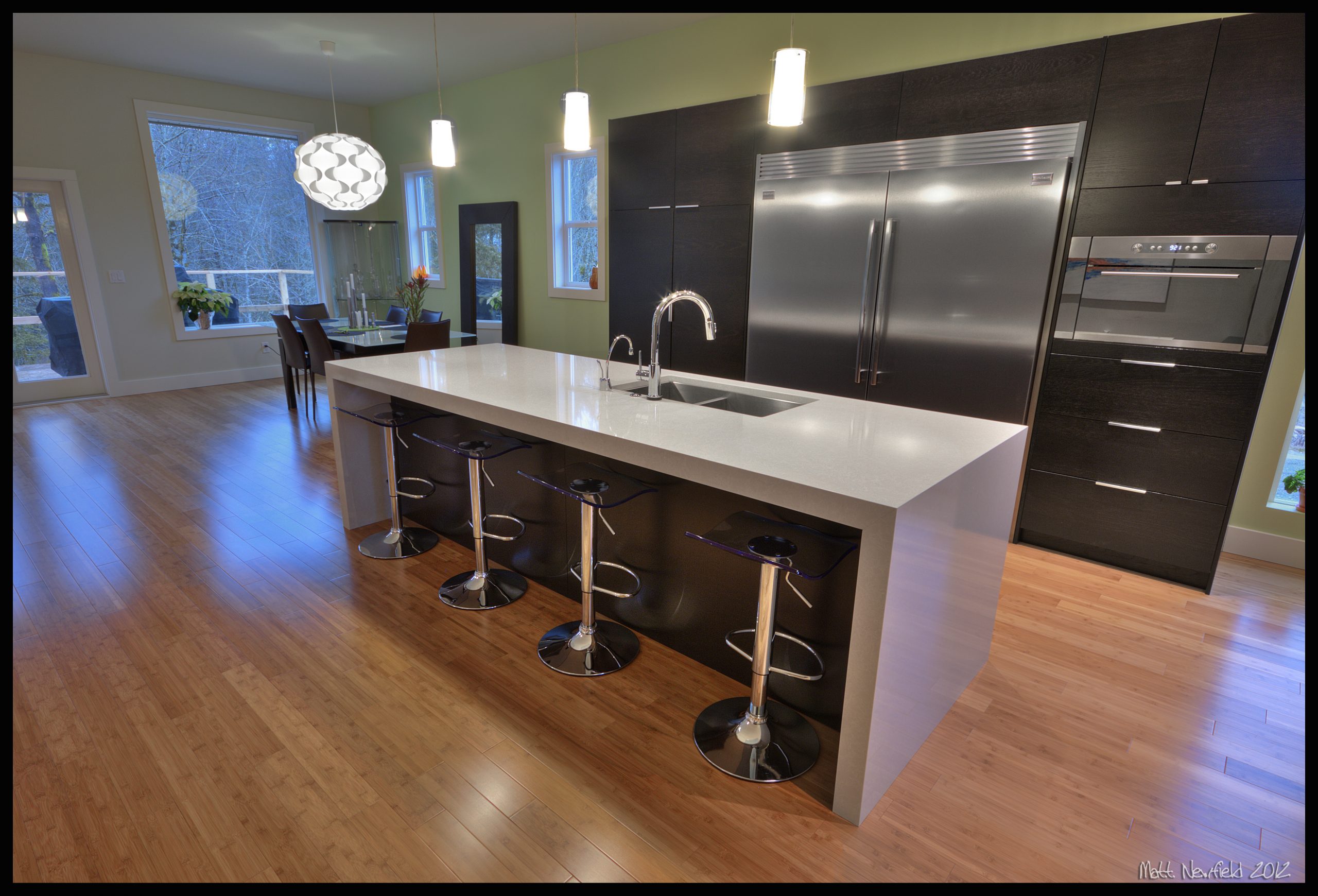
Undermount sinks mount below the stone, so crumbs wipe straight into the basin. That’s a small delight you notice every day. The edge detail matters, too. Fabricators can shape the cutout with a slight reveal, a flush look, or a small overhang of stone.
There’s a catch that expert contractors know. The mounting hardware and adhesive need solid support. Heavier sinks, like cast iron or fireclay, may require extra bracing in the cabinet. That’s normal, yet it needs planning.
Drop-In Sinks And Simple Serviceability
Drop-in sinks sit on top of the stone. Installation is often simpler, and replacement later can be easier. If a garbage disposal or plumbing line has been a recurring pain point in your home, that service access can feel like a win.
The trade is the rim. Grime can collect at the edge, and wiping counters takes an extra step. Some people don’t care. Others notice it every time they clean.
Farmhouse Fronts And Workstation Sinks
Farmhouse sinks bring a bold focal point, and they pair nicely with stone. They also change cabinet requirements. The front apron affects the cabinet face and the support method, so your cabinet shop needs the sink specs early.
Workstation sinks add ledges for cutting boards and racks. They’re handy, yet they add planning details, like faucet reach and clearance for accessories. If you cook a lot, this can be a “why didn’t we do this sooner” upgrade.
Cutouts, Corners, And The Details People Miss
A sink cutout is not only a hole in the stone. It’s a structural and visual decision. Small details change the end result more than people expect.
These are the parts worth a closer look.
Corner Radius And Sink Fit
Sinks have corner shapes, and stone cutouts do, too. A tight corner sink paired with a larger radius cutout can look off. A mismatch can also leave gaps that collect water and grime.
Manufacturers publish cutout templates. Use them. Send them to your fabricator early, and confirm whether they need a paper template, a PDF, or the sink on site.
Reinforcement Around The Sink
Stone can crack if the span around a cutout is too thin, especially near a cooktop cutout or a narrow strip between sink and edge. This comes up with large single-bowl sinks and slim front rails.
Support can be added with rods, brackets, or other reinforcement methods. The shop will guide this, yet it starts with knowing the sink size and location.
Accessories That Need Holes
A faucet isn’t the only thing that can require drilling. People add soap dispensers, filtered water taps, air gaps, and even instant hot water systems. Brands like Insinkerator often come up in these conversations, since hot water dispensers and filtration are common add-ons.
A short list helps keep the plan tidy.
- Main faucet hole count and diameter
- Soap dispenser or lotion pump
- Filtered water tap
- Dishwasher air gap, if required locally
- Disposal switch, if you want it on the counter
Those extras are easier to include now than later.
Faucet Planning That Feels Fussy, Yet Pays Off
Faucets are functional, but they’re also “touch points.” You use them daily, so placement and type matter. A little planning prevents awkward reach, splash, and regret.
Here are the key faucet decisions that shape the countertop plan.
Hole Count And Deck Plate Reality
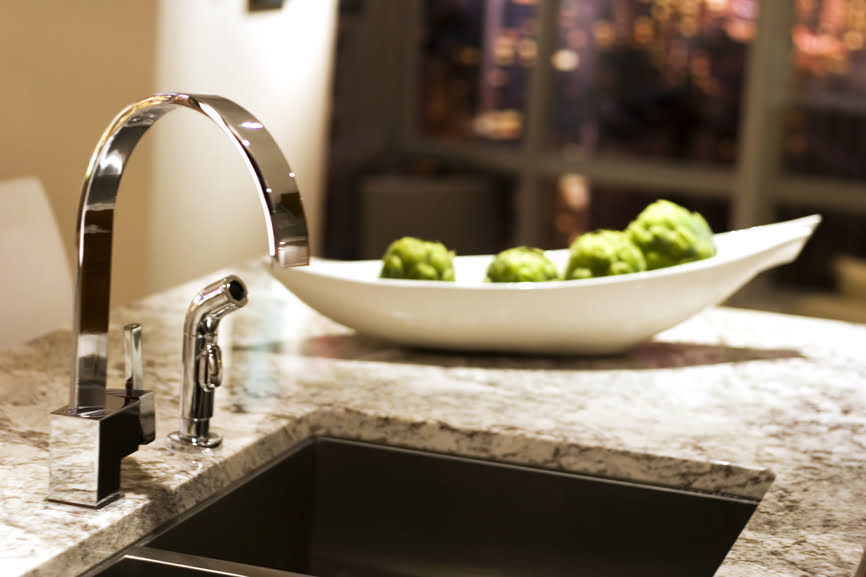
Some faucets need one hole. Others need three. Some can work either way with a deck plate. If you think you might change styles later, consider whether extra holes would be visible.
Stone holes are forever. That alone makes this worth a few minutes of attention.
Spout Reach, Swing, And Sink Size
A small faucet on a large sink can feel annoying. Water hits the wrong spot, and washing a pan becomes a splashy mess. A tall faucet with high pressure can also cause spray if the sink bowl is shallow.
Match the faucet’s reach to the sink’s center. If you’re choosing a workstation sink with ledges, confirm the faucet clears accessories and doesn’t crash into a rack.
Faucet Placement Versus Backsplash And Windows
Backsplash height, window trim, and ledges can limit faucet placement. A faucet handle that hits a window sill is the kind of mistake nobody forgets. The fix usually costs time and money.
If you’re adding a full-height stone backsplash, call that out early. It can affect faucet clearance and the look of the whole wall.
Placement Choices That Affect Seams And Sightlines
Sink location can influence seam placement and slab layout. If you want the stone pattern to flow in a certain direction, or you’re trying to avoid a seam near a sink rail, speak up early.
Here’s where it gets practical.
Sink Centering And Cabinet Layout
A centered sink looks right in many kitchens. Yet dishwasher placement, trash pullouts, and plumbing can nudge the sink location. That’s fine. It’s still worth confirming the final cabinet plan before templating.
When cabinets shift late, the sink cutout shifts with them. The shop can only cut what’s been approved.
Seams Near Cutouts
Seams and cutouts can coexist, but seam location needs care around structural weak points. A fabricator may steer a seam away from a narrow strip of stone near a sink or cooktop. That’s not being picky. It’s risk control.
If you’ve read about seam placement already, this is the cousin topic that makes it real.
A Quick Checklist Before Templating Day
Templating day feels like a milestone. Treat it like one. A short checklist keeps the process smooth and avoids last-minute scrambling.
Bring these items to the table.
- Final sink model and mounting type
- Faucet spec sheet and hole requirements
- Accessory list, including filtration or soap dispenser
- Confirmation of cabinet install completion and level
- Notes on sink centering preferences and any “must-have” constraints
Once these are set, fabrication becomes far more predictable.
The Calm Outcome Everyone Wants
When sink and faucet choices are made early, the countertop process feels smoother. The digital template matches reality. Cutouts land where they should. Install day feels like a finish line, not a negotiation.
You know what? This planning is less about rules and more about freedom. Make the decisions once, make them well, and enjoy the stone the way you pictured it.